Brief Summary of Prescribing Information
INDICATIONS: Cetacaine is a topical anesthetic indicated for use on all accessible mucous membrane where pain control is required, except the eyes.
WARNINGS/PRECAUTIONS:
Methemoglobinemia: Cases of methemoglobinemia have been reported in association with local anesthetic use. Do not exceed maximum dose. If a patient shows signs of methemoglobinemia, discontinue Cetacaine and any other oxidizing agents. Depending onthe severity of the symptoms, patients may respond to supportive care, i.e., oxygen therapy, hydration. More severe symptoms may require treatment with methylene blue, exchange transfusion, or hyperbaric oxygen.
ADVERSE REACTIONS: Adverse reactions, such as hypersensitivity, including anaphylaxis, are rare. Discontinue use if rash or allergic reactions develop. The most common adverse reaction caused by local anesthetics is contact dermatitis. Cetacaine should not be applied for prolonged periods except under continual supervision.
PEDIATRIC/PREGNANCY/GERIATRIC: Safe use of Cetacaine during pregnancy has not been established and should not be used during early pregnancy unless a doctor determines the benefits outweigh the risks. An appropriate pediatric dose has not been established. Reduced dosage is recommended among elderly, acutely ill, and very young patients (i.e., children 2 years and older.)
CONTRAINDICATIONS: Do not use Cetacaine to treat infants or children younger than 2 years. Do not inject or use in the eyes. Cetacaine is contraindicated in patients who are hypersensitive to any of its ingredients or are known to have cholinesterase deficiencies. To avoid excessive absorption, Cetacaine should not be used under dentures or cotton rolls, as prolonged contact may cause an escharotic effect. Routine topical anesthetic precautions should be observed.
For complete prescribing information visit www.cetacaine.com.
PEDIATRIC/PREGNANCY/GERIATRIC: Safe use of Cetacaine during pregnancy has not been established and should not be used during early pregnancy unless a doctor determines the benefits outweigh the risks. An appropriate pediatric dose has not been established. Reduced dosage is recommended among elderly, acutely ill, and very young patients (i.e., children 2 years and older.)
CONTRAINDICATIONS: Do not use Cetacaine to treat infants or children younger than 2 years. Do not inject or use in the eyes. Cetacaine is contraindicated in patients who are hypersensitive to any of its ingredients or are known to have cholinesterase deficiencies. To avoid excessive absorption, Cetacaine should not be used under dentures or cotton rolls, as prolonged contact may cause an escharotic effect. Routine topical anesthetic precautions should be observed.
For complete prescribing information visit www.cetacaine.com.
Rx. For professional use only.
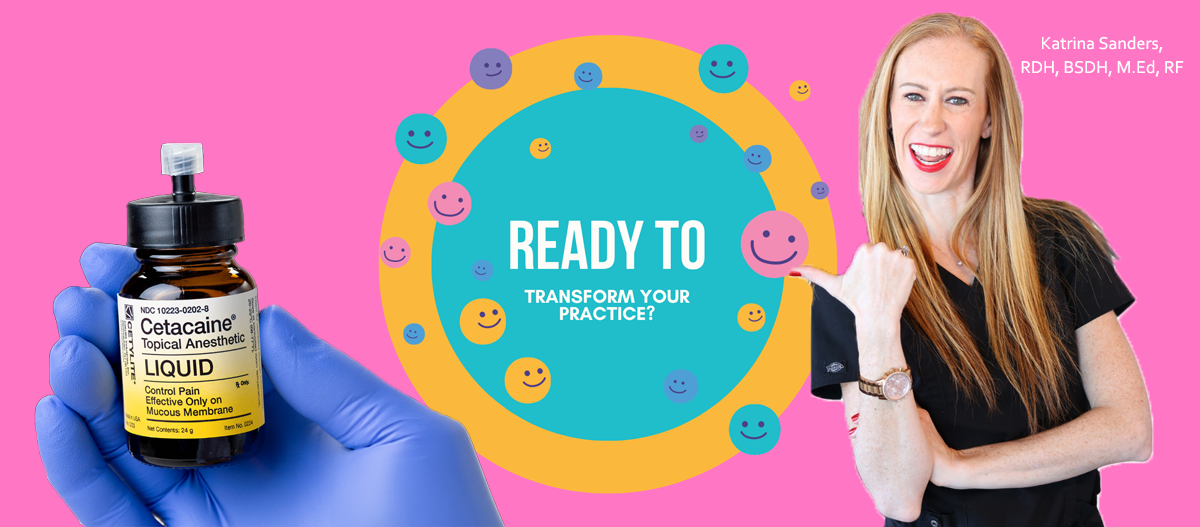
(14% benzocaine, 2% butamben, 2% tetracaine HCl)
Topical Anesthetic Liquid
![Image]()